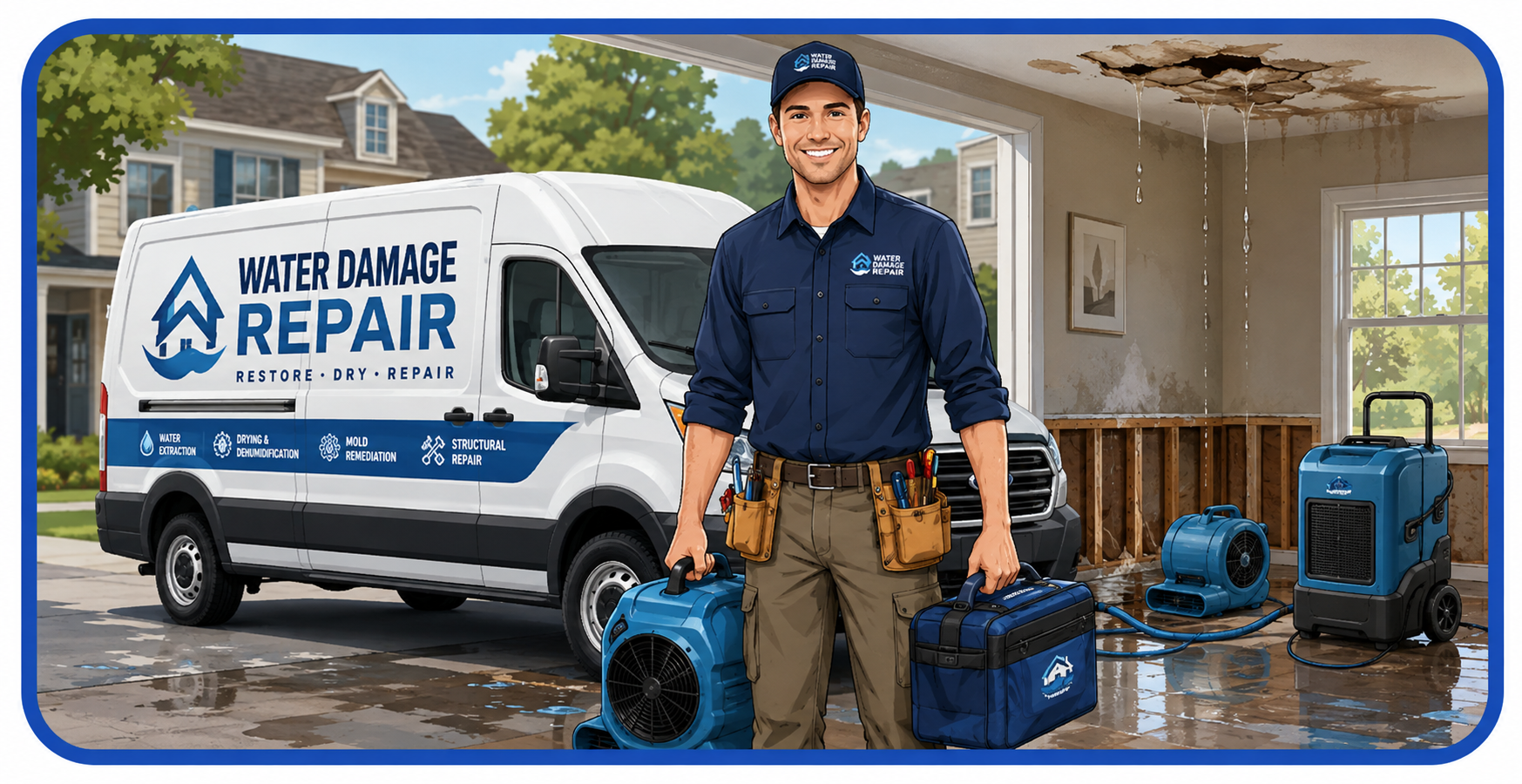
The visible water is gone, the carpet looks fine, and someone told you a couple of fans would finish it off. But the studs behind the drywall are still reading wet, the subfloor is holding moisture, and the house smells a little off. Structural drying is how you get the framing, subfloor, and walls truly dry before anything gets closed up.
Free referral to independent, licensed and insured local pros. Zip codes served include 88012 88011 88005 88007 88001 87654 88006 88013.

We are a referral line, not a contractor. Calls are routed to independent local pros around Las Cruces who treat drying as a measured process with daily readings and written logs.
Low-grain refrigerant dehumidifiers pull moisture to levels standard units cannot reach. Desiccant units handle cold spaces and dense materials. Air movers are placed at specific angles to sweep moisture off wet surfaces.
The contractor records temperature, relative humidity, GPP, and material moisture each day, then adjusts equipment based on the numbers.
Ask for proof of license and insurance before work begins.
You will see equipment day rates and an estimated drying timeline before setup.

The goal is simple: get every wet material back to the moisture level of similar dry materials in the house, and prove it with readings.

Pin and pinless meters plus an infrared camera show exactly where water traveled, including under cabinets, inside walls, and across the subfloor.
Sealing off the wet area with plastic focuses the equipment and shortens drying time.
Small holes behind baseboards let injection systems push dry air into wall cavities, which can avoid tearing out drywall that is otherwise sound.
Floor mat systems and targeted airflow dry hardwood and plywood subfloors slowly enough to limit cupping and cracking.
Drying ends only when readings confirm the structure is dry, and you get the log for your records.
Call +1-877-637-9008 and explain what got wet, when, and whether water has already been extracted. That tells dispatch you need a drying specialist.
The pro arrives with moisture meters, infrared camera, and drying gear.
You get a moisture map, a dry standard baseline, and a written drying plan with costs.
Equipment runs with daily readings and adjustments until every material reaches dry standard, then it is removed and the log is handed over.
Closing up wet framing is how mold starts.
We had fans running for a week after a leak and it still smelled. The drying contractor found wet studs with a thermal camera and had them dry in four days with real equipment.
Laura F.Hidden wet framing after leakThey drilled small holes behind the baseboards and pumped dry air into the walls. We did not have to tear out any drywall.
Kevin Y.Wall cavity dryingThe daily drying logs were detailed and made the insurance claim straightforward.
Mariah S.Insurance drying documentationThey saved our cupping hardwood with floor mats and patient drying.
Henry L.Hardwood floor drying

Typically three to five days, longer for hardwood, plaster, or concrete.
Household units move far less air and cannot reach the low humidity levels needed to pull moisture out of framing and subfloors. Drying slowly also gives mold time to grow.
It is the baseline moisture reading of dry materials in your house. Wet materials are dried until they match.
GPP is a measure of moisture in the air. Lower GPP means faster drying.
It is loud and warm. Closing off the drying area helps at night.
No. A Water Damage is a free referral service that connects you with independent, licensed and insured local contractors who perform the drying.

Calls from Las Cruces and zip codes such as 88012 88011 88005 88007 88001 87654 88006 88013 are routed to structural drying pros working locally.
Nearby cities are listed below.