How sampling works
What Mold Testing in Pughtown, PA Really Measures
Mold testing is lab science. The most common air method uses a spore-trap cassette on a calibrated pump. A typical run is 15 liters per minute for 5 minutes, so 75 liters of air pass over an adhesive strip inside the cassette. The lab counts and identifies what landed on that strip under a microscope, then converts the count to spores per cubic meter of air.
A single indoor count tells you very little without a comparison. Outdoor air always carries spores, which is why a control sample gets taken outside during the same visit. If indoor levels run well above outdoor levels, or the indoor sample is dominated by types like Stachybotrys or Chaetomium that rarely show up outside in any quantity, that points to an indoor source. There are no federal numeric limits for indoor spores, which is exactly why the outdoor comparison carries so much weight.
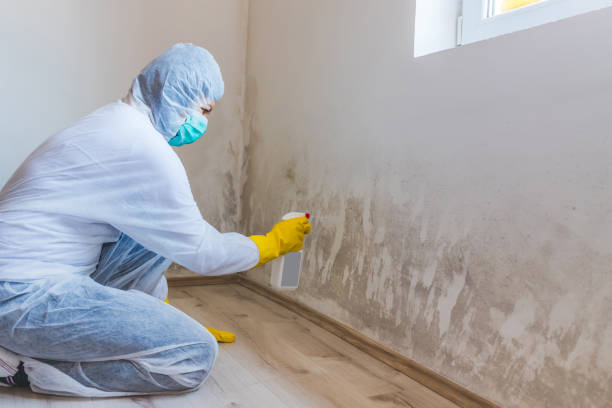
When there's a visible spot and you want it identified, surface samples come in. Tape-lifts grab spores and hyphae from smooth surfaces, swabs handle textured spots, and bulk samples are small cut pieces of the material itself. A wall-cavity air sample, drawn through a tiny hole, can show whether a closed cavity is loaded with spores. Most Pughtown callers want testing for paperwork: a real estate disclosure, a tenant complaint, or proof a cleanup worked.