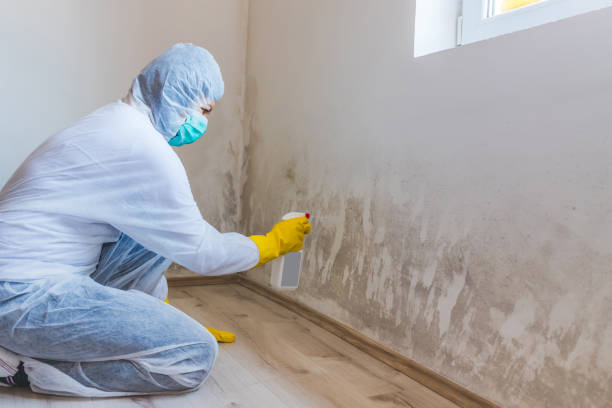
How sampling works
What Mold Testing in Brookville, IN Really Measures
Testing means collecting physical samples and handing them to a microbiology lab. For air, the sampling pro attaches a sealed spore-trap cassette to a pump calibrated with a rotameter, then runs it at a set flow rate, often 15 liters per minute for 5 minutes, which pulls 75 liters of air across a sticky slide. The lab counts and identifies what landed on that strip under a microscope, then converts the count to spores per cubic meter of air.
A single indoor count tells you very little without a comparison. Outdoor air always carries spores, which is why a control sample gets taken outside during the same visit. The analysis uses rank order: indoor air in a healthy house usually mirrors the outdoor mix at lower numbers, so a spore type that tops the indoor list but barely appears outside is a red flag. There are no federal numeric limits for indoor spores, which is exactly why the outdoor comparison carries so much weight.
When there's a visible spot and you want it identified, surface samples come in. Tape-lifts grab spores and hyphae from smooth surfaces, swabs handle textured spots, and bulk samples are small cut pieces of the material itself. A wall-cavity air sample, drawn through a tiny hole, can show whether a closed cavity is loaded with spores. Most Brookville callers want testing for paperwork: a real estate disclosure, a tenant complaint, or proof a cleanup worked.