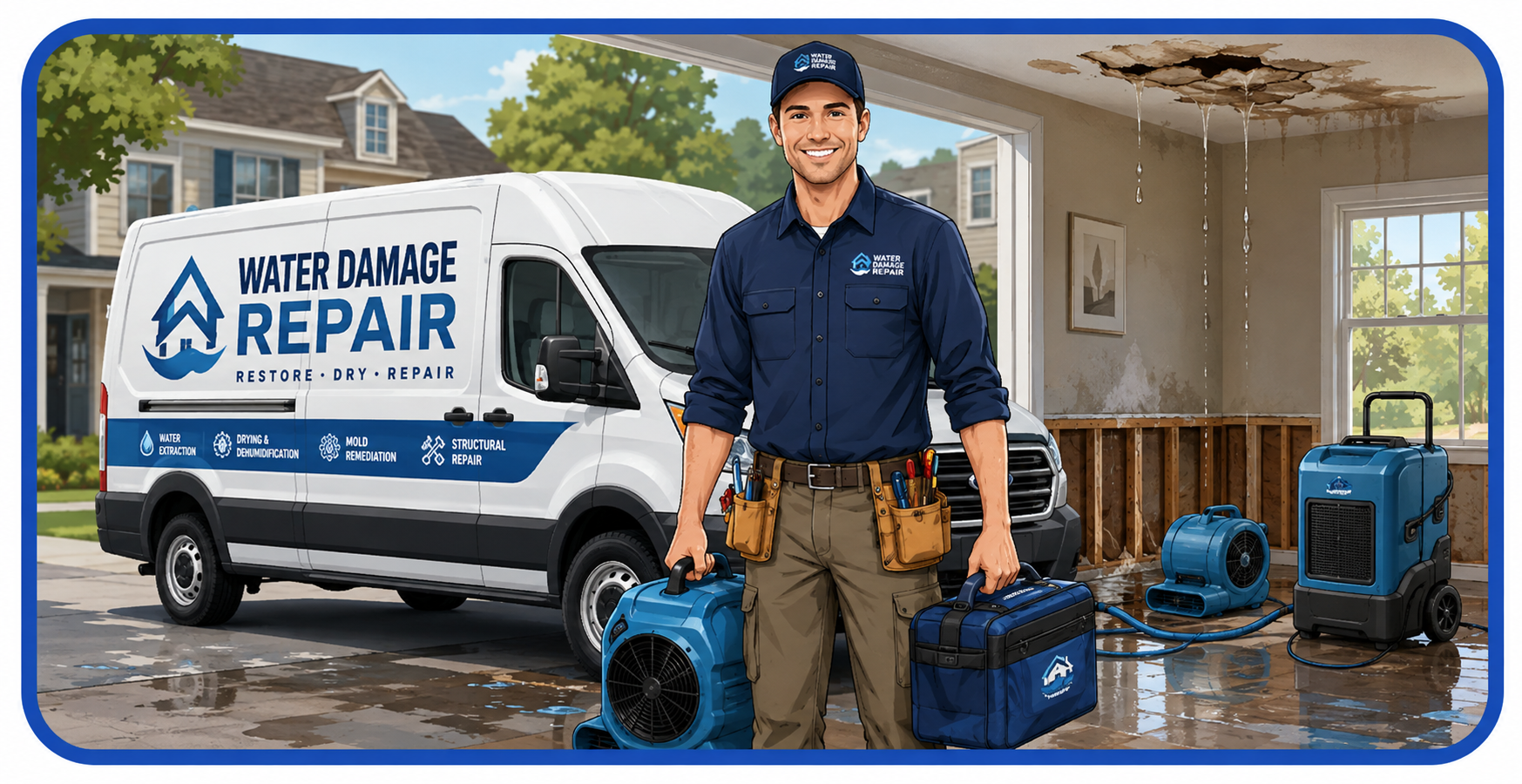
Rising water from a river, creek, or flash flood is never clean. When it pulls back, it leaves mud, debris, and bacteria in every surface it touched. Flood cleanup means removing contaminated materials, sanitizing what stays, and then drying the structure.
Free referral to independent, licensed and insured local pros. Zip codes served include 30529 30599.

We are a referral line, not a contractor. Calls are routed to independent local pros around Commerce who handle Category 3 floodwater safely and document every step for your flood claim.
Flood cleanup contractors work in protective suits, boots, and respirators, and use EPA-registered disinfectants on every surface the water touched.
Standard homeowners policies usually exclude outside flooding, so the claim often goes through a separate flood policy. Contractors measure and photograph the flood line and itemize removed materials to support it.
After big floods, storm chasers appear. Ask any contractor for license and insurance proof before work starts.
Pricing for each phase is written down and approved by you first.

Unlike a clean-water leak, a flood requires mud removal, demolition below the waterline, and full sanitizing before the structure can be dried.

Crews shovel and squeegee silt off floors, haul debris to a dumpster, and pressure wash hard surfaces so nothing contaminated is left behind.
Contaminated drywall and insulation come out above the flood line to catch water that wicked upward.
Every exposed surface is cleaned and treated with an antimicrobial before drying starts.
Once the building is cleaned out, air movers and dehumidifiers run until framing and slab readings show the structure is dry enough to rebuild.
Porous items like mattresses, upholstered furniture, and stuffed toys that sat in floodwater usually cannot be saved. Hard items can often be cleaned. Contractors help sort and document both for your claim.
Tell the dispatcher the water depth and whether it is still inside. That decides which crew is best suited.
You will hear back with a realistic arrival window. Widespread floods can slow response, and you will be told so.
Expect a safety check, flood line measurements, and a written estimate before work begins.
Mud and damaged materials come out, surfaces are disinfected, and drying runs until the structure is ready for repairs.
Contaminated materials need to come out fast.
Fourteen inches of river water on the first floor. They mucked it out, cut the walls three feet up, disinfected, then started drying.
Paul and Dee A.River flooding, first floorEvery room had flood line photos and measurements. The adjuster said it made his job easy.
Imani C.Flash flood, flood insurance claimThey were honest about what could not be saved and helped document all of it for the insurance company.
Rob G.Flood-damaged contentsAfter the flood, strangers were knocking on doors. This pro was local, licensed, and wrote the price down before starting.
Teresa M.Post-storm flood cleanup

It can be. Outside floodwater is Category 3 and may carry sewage, chemicals, and bacteria. If you clean any of it, wear boots, gloves, eye protection, and a respirator, and keep children away.
Most standard homeowners policies exclude flooding from outside water. Coverage usually comes from a separate flood policy. Check with your agent about which applies to you.
Typically one to two feet above the water mark to catch wicking. Deeper floods may require full-height removal.
Hard furniture may survive with cleaning. Soft and porous items usually need to be discarded.
Right after the water goes down and the building is safe. Waiting lets mold and bacteria spread.
No. A Water Damage is a free referral line connecting you with independent, licensed and insured local contractors who perform the work and bill you directly.

Independent flood cleanup contractors in the network work throughout Commerce, GA, including low-lying zip codes like 30529 30599.
Nearby cities are listed below. During regional flooding, arrival times may run longer, and the dispatcher will be upfront about it.